Warning: Spoilers for Episode 8 are included in this piece
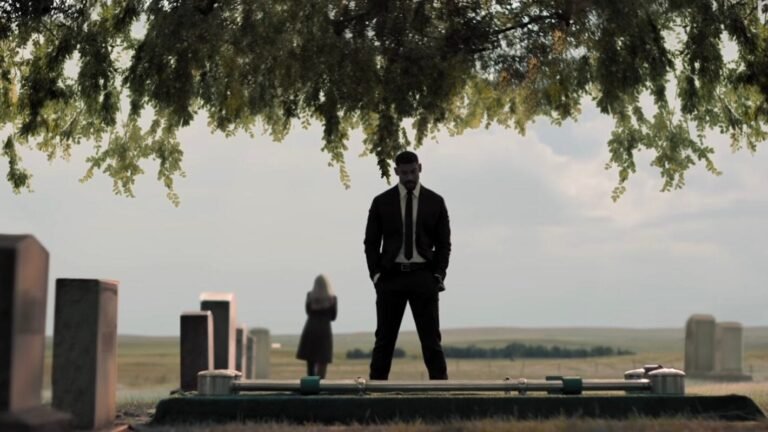
The Lanterns finale isn’t interested in ending with the biggest fight. Instead, it ends with something far more difficult: letting its characters finally confront the things they’ve been running from.
Lanterns could have ended its first season with spectacle. After eight episodes of murder mysteries, alien mythology, Green Lantern lore and the increasingly dangerous presence of the Manhunters, audiences could reasonably have expected a finale filled with glowing constructs, explosions and a definitive superhero showdown.
Instead, “Dirt and Stars” chooses something much quieter.
And for some people, that makes it hurt more.
The finale understands something that Lanterns has been quietly building toward all season: underneath the rings, uniforms and cosmic threats are people who are simply trying to live with the things that happened to them.
That is ultimately what makes the episode work.

Hal Jordan’s Story Is Surprisingly Tragic
Kyle Chandler’s Hal Jordan has always been one of the show’s greatest strengths, but the finale gives the character something that superhero stories don’t often allow their heroes: an ordinary, painful existence after the heroism is over.
Hal has already paid for his mistakes. He has spent years carrying the consequences of the Rushville tragedy, and when he finally gets another chance at something resembling a normal life, there is a heartbreaking simplicity to what he wants.
He wants peace, wants to be loved, and wants to believe that perhaps he can still be a good man despite everything that happened. And that makes his fate considerably more painful.
The revelation surrounding Hal’s death isn’t simply designed to shock the audience. It is tragic because of what it says about the people involved. Kerry doesn’t just become a conventional villain, and Hal doesn’t suddenly become a saint. These are damaged people making terrible decisions while carrying years of anger, guilt, fear and grief.
That distinction matters.
The finale doesn’t ask the audience to decide who deserves our sympathy. It asks us to understand why these people became capable of hurting one another.

Aaron Pierre Gives John Stewart His Moment
If Hal’s story is about what happens when a person cannot escape his past, John’s is about deciding whether his past gets to determine his future.
Aaron Pierre has spent the entire season playing John Stewart as a man who doesn’t particularly want to become a symbol.
He doesn’t blindly trust the Guardians. He doesn’t want to inherit somebody else’s idea of what a Green Lantern should be. And he certainly doesn’t want to become another version of Hal Jordan.
The finale finally allows John to understand that this resistance doesn’t mean he isn’t meant to be a hero. It means he has to decide what kind of hero he wants to become.
John taking the ring is therefore more meaningful than simply watching another character receive superhero powers.
He isn’t just becoming Green Lantern. He’s choosing himself.
The fact that John doesn’t simply accept the existing rules makes the moment even stronger. His relationship with fear, responsibility and authority has been one of the show’s central ideas, and the finale brings those threads together without pretending that becoming a hero magically fixes everything.
John is still afraid, still carrying guilt and uncertainty. He simply decides to move forward anyway and perhaps that’s the most appropriate definition of courage the show could have given him.
The Hal and John Goodbye Is The Real Finale
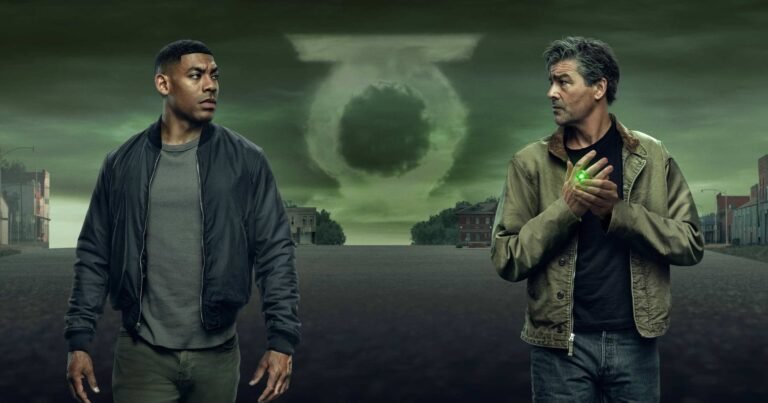
For all the mythology surrounding Lanterns, the scene that ultimately matters most is the goodbye between Hal and John, which is remarkably simple.
There is no giant battle competing for the audience’s attention. No elaborate CGI sequence is telling us that this is an important moment. It’s just two men who have spent the season frustrating, challenging and hurting each other finally acknowledging what they meant to one another.
That scene works because the relationship has earned it. Hal was never simply John’s mentor and John was never simply Hal’s replacement.
They became something much closer to family, even if neither man was particularly good at admitting it.
And when Hal finally gives John the encouragement he needs, the moment lands because it feels less like a superhero passing a mantle and more like an older man telling someone younger: You don’t have to become me.

The Manhunter Mystery Doesn’t Matter As Much As You Think
The finale also answers some of the season’s biggest mysteries, including Noah’s connection to the Manhunters and Sinestro’s role in everything that has happened.
Some of these revelations work better than others.
The mythology is intriguing, but there are moments when Lanterns feels like it is setting pieces on the board for a second season rather than completely satisfying the audience in the present.
That isn’t necessarily a flaw.
The show clearly wants the first season to function as the beginning of a much larger Green Lantern story. The finale leaves enough mythology unexplored to make the future exciting without completely undermining the emotional conclusion of the season.
Still, viewers who came primarily for the cosmic side of Green Lantern may understandably wish the finale had given them more.
This remains a remarkably grounded superhero series, as I’ve alway said.
A Finale About Fear
The most fitting thing about “Dirt and Stars” is that the episode ultimately isn’t about being fearless.
It is about understanding fear.
John has spent much of the season trying to prove that he can control himself, control his emotions and control the situation around him. Hal, meanwhile, represents the consequences of a man who spent years believing that strength meant pushing forward no matter what.
The finale arrives at a different conclusion. Being afraid doesn’t make you weak and being hurt doesn’t make you broken.
Making mistakes also doesn’t necessarily mean you are beyond redemption. Sometimes courage is simply accepting that you are afraid and choosing to move anyway.
That idea gives the finale considerably more emotional weight than another CGI-heavy superhero battle ever could.

Does Lanterns Stick The Landing?
Mostly, yes.
The finale isn’t perfect.
Some of the mythology feels rushed. A few revelations are easier to predict than the show probably intended, and viewers expecting a more traditional Green Lantern climax may find the restrained approach frustrating. Other critics have similarly noted that the finale’s grounded nature can feel at odds with the larger cosmic mythology the series is beginning to introduce.
But judging Lanterns purely by how much superhero spectacle it delivers would miss the point.
This show was never really about the ring. It was about the people holding it.
Hal Jordan is a man trying to live with what he did.
John Stewart is a man trying to decide what he can become.
Kerry is a woman whose grief and anger eventually consume her.
Noah is struggling against an inheritance he never asked for.
And somewhere between all of them is the question the series keeps returning to: What do we do with the things that have happened to us?
The finale doesn’t provide an easy answer. It simply suggests that we can choose what happens next, which feels like the right ending.
Lanterns began as a murder mystery wearing the costume of a superhero show.
It ends as something more human: a story about grief, forgiveness, fear, love and the difficult process of becoming someone better than the person you used to be.
For a show about cosmic police officers carrying rings powered by willpower, its greatest strength was always its humanity.
And in the end, that’s exactly what it chose to protect.
About the Author